Sponsored article
Why Are Signs of Wear in a Probat Roaster More Important Than Its Production Year?
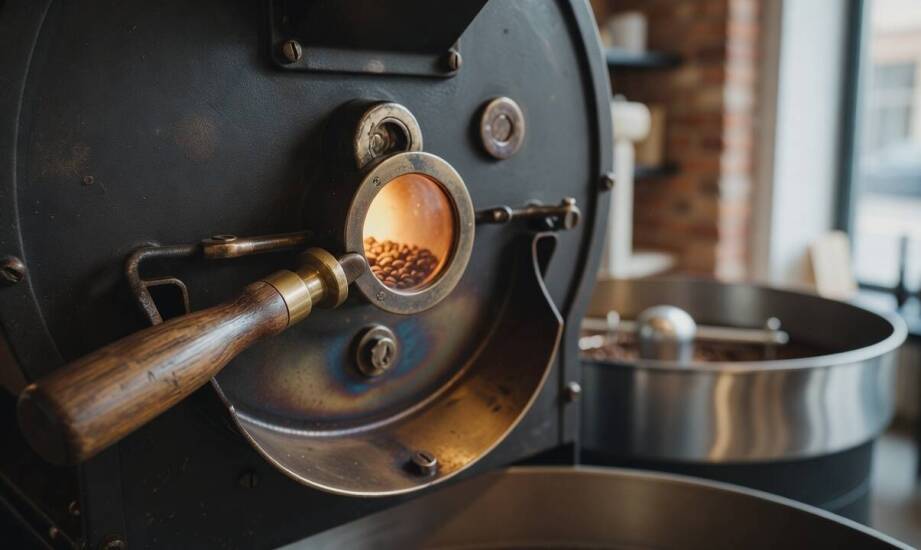
- Which External Signs of Wear Indicate Mechanical Problems?
- Why Do the Drive System and Thermal Performance Determine Roast Consistency?
- How Can You Tell the Difference Between a Fully Restored Machine and a Cosmetic Refurbishment?
- When Is an Older Drum Roaster the Right Choice?
- Technical Condition Matters More Than Age
- Key Takeaways
- FAQ
The production year of a used coffee roaster rarely provides an accurate picture of its true market value. Far more meaningful insights come from examining wear patterns on key components. The condition of the drum, drive system, and heating assembly directly affects the machine’s ability to maintain a stable roasting process.
Read more: The impact of fresh berries on the quality of dishes in the HoReCa sector
Industrial roasting equipment can remain operational for decades, but only when the components most exposed to wear are inspected and maintained regularly. Understanding these early warning signs makes it much easier to evaluate a machine before introducing it into daily production.
Read more: Why Temperature Is More Important Than Time When Hot Smoking
Which External Signs of Wear Indicate Mechanical Problems?
One of the earliest warning signs is a longer roasting cycle despite using the same batch size and process parameters. If the same green coffee requires additional minutes to reach the desired roast profile, the machine may be losing thermal efficiency.
Uneven bean colour and sensory inconsistencies can result from issues with drum rotation, airflow, burner performance, or temperature sensors. Unusual noises, grinding sounds, or excessive vibration during operation often indicate wear in the main shaft bearings. Similar symptoms may also be caused by loosened drivetrain components that no longer transfer torque smoothly.
Increased smoke emissions in the roasting facility are rarely caused by the coffee itself. More often, they indicate restricted airflow due to blocked exhaust channels or malfunctioning extraction fans. Temperature readings that do not correspond with the actual behaviour of the roast may point to sensor issues. Careful observation of these symptoms can reveal developing faults before costly disassembly becomes necessary.
Why Do the Drive System and Thermal Performance Determine Roast Consistency?
Drum seals play a critical role in maintaining proper airflow and stable roasting conditions. As they deteriorate, air leaks can disrupt hot-air circulation and make profile control more difficult.
At the same time, the drive system, including gear assemblies, transmission belts, and geared motors, must ensure stable drum rotation.
Damaged seals combined with an inconsistent drive system can significantly reduce control over the roasting process. In a production environment, this instability may lead to increased waste and reduced batch consistency.
The burner provides the thermal energy needed for roasting, primarily through convective heat transfer. When flame modulation becomes inconsistent or burner nozzles are heavily contaminated, heat distribution becomes less predictable. A clogged chaff collection system can further restrict airflow, potentially creating localized overheating and uneven bean development.
Long-term neglect of the heating system may gradually reduce the repeatability of future roast batches.
How Can You Tell the Difference Between a Fully Restored Machine and a Cosmetic Refurbishment?
A detailed service history remains the most reliable source of information about the true condition of an industrial coffee roaster.
A complete restoration involves disassembling the machine down to its structural frame and evaluating every major mechanical component.
Replacing support bearings, rebuilding motors, and installing new sealing components can restore the original operating characteristics of the system.
By contrast, refurbishment limited to sandblasting and repainting only improves appearance and may conceal underlying wear. The visual condition of the machine should never be the primary factor when evaluating production equipment.
Temporary repair solutions rarely withstand the thermal stresses generated by continuous roasting operations. Sealing structural gaps with silicone or manually compensating for excessive drum play may only provide short-term improvements.
A thorough restoration process also includes controller calibration, cleaning of exhaust channels, and airflow performance testing. If there is no documentation confirming such work, the risk of future breakdowns remains significantly higher.
A well-informed buyer should always determine whether servicing addressed the root cause of previous issues or merely concealed the symptoms.
When Is an Older Drum Roaster the Right Choice?
Older generations of drum roasters continue to be highly valued in medium-scale coffee production.
Traditional machines built with heavy cast-iron components often provide substantial thermal mass, helping to stabilise roasting conditions. For production environments focused on longer and more traditional roast profiles, proven designs can deliver predictable and consistent performance.
The additional thermal capacity of thicker drum walls also helps roasters move smoothly between batches without requiring lengthy reheating times.
A single mention of Coffed Coffee Roasters is appropriate here. Since 2008, the company has specialised in refurbishing used coffee roasting equipment and manufacturing its own SR Series roasters. Their workshop experience includes the assessment and restoration of equipment from international markets, including classic Probat machines such as the G60.
Purchasing a well-inspected and professionally evaluated machine is often a more financially predictable option than investing in unverified equipment with an unknown maintenance history.
Technical Condition Matters More Than Age
The practical value of a roasting machine comes from the condition and interaction of its critical components rather than from the year shown on the serial plate.
A properly balanced drum, a reliable drive system, and a responsive burner significantly improve the likelihood of producing consistent roast profiles. Building a dependable roasting operation always starts with an accurate assessment of technical condition.
Only sound mechanical systems allow a roasting business to translate craft expertise into repeatable commercial production while minimizing the risk of costly downtime.
Key Takeaways
The production year of a used roaster reveals less about its value than the condition of the drum, drive system, and thermal components.
Longer roast times, unusual noise, vibration, and smoke can indicate wear affecting roast consistency.
Seals and drive components should be assessed together because both influence process stability.
Burner condition and airflow management have a direct impact on thermal consistency and roast development.
Full restoration can renew machine performance, whereas cosmetic refurbishment may only hide existing issues.
Older drum roasters can remain excellent investments if their condition matches production requirements.
The value of a used roaster depends primarily on its technical condition, not on its age.
FAQ
What are the most common signs of wear in a used Probat roaster?
The most common indicators include extended roasting times, uneven bean colour, abnormal operating noise, and excessive vibration from the drive system. Increased smoke emissions and inconsistent sensor readings can also point to mechanical, airflow, or sensor-related issues.
Why are drum seals so important when evaluating a coffee roaster?
Drum seals directly affect airflow and pressure balance inside the roasting chamber. When seals wear out, thermal stability decreases, making roast profiles more difficult to control. For this reason, seals should always be evaluated alongside the drive system and drum operation.
What is the difference between a full restoration and a cosmetic refurbishment?
A full restoration involves disassembly, inspection of critical components, replacement of worn parts, and calibration of control systems. Cosmetic refurbishment usually focuses on cleaning, sandblasting, and repainting without addressing underlying mechanical wear. Service documentation is therefore a far more reliable indicator of quality than appearance alone.
You might be interested
How Service Access and Spare Parts Availability Affect the Uptime of Prize Machines
How Cutting Technology Changes Burr Type and Deburring Parameters in Manufacturing

The impact of hand decoration on the aesthetics of ceramic vases
