Sponsored article
How Cutting Technology Changes Burr Type and Deburring Parameters in Manufacturing
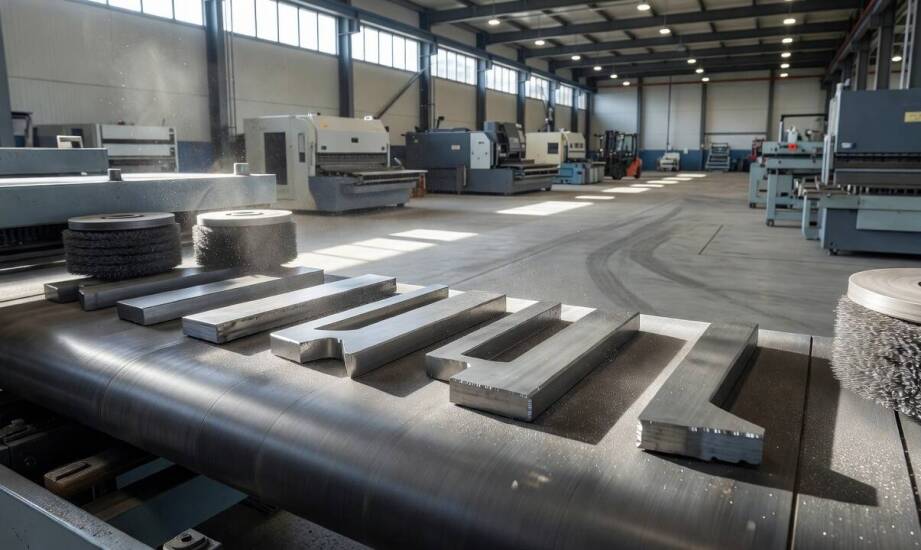
Industrial sheet metal processing rarely ends with cutting a part from a larger sheet. The same component may require a completely different edge-finishing strategy depending on the cutting technology used. Burr geometry, adhesion strength, and optimal processing parameters are directly influenced by how the material is separated.
Understanding these differences helps prevent surface damage and speeds up preparation for downstream operations such as welding, coating, or assembly. Proper adaptation of the deburring process to the characteristics of the cutting residue also helps eliminate bottlenecks in production.
How Does Cutting Technology Affect Burr Formation?
Laser cutting typically produces very small burrs along the lower edge of the sheet metal. When cutting parameters and assist-gas pressure are properly optimized, the edge may remain nearly burr-free. Problems usually occur when cutting speeds are too high, optics are worn, or the assist gas fails to remove molten material efficiently.
Plasma cutting creates a noticeably different edge condition. It often generates larger burrs and a thicker oxide layer due to the wider heat-affected zone. Molten metal can solidify along the cut edge, forming hard deposits that require more intensive mechanical finishing.
Mechanical punching and stamping rely on the interaction between punch and die clearance. In these processes, burr size is heavily influenced by tool geometry and cutting clearance. Excessive clearance can create a pronounced and sharp burr, while work hardening near the cut edge may increase abrasive tool wear during finishing operations.
How Do Material Type and Sheet Thickness Affect Deburring?
The physical properties of a material have a direct effect on edge quality after cutting. Sheet thickness and alloy composition influence both the size of the burr and how strongly it adheres to the edge.
For example, thick carbon-steel sheets processed with plasma cutting can develop stubborn hardened deposits that require more aggressive deburring methods than standard abrasive belt processing.
Stainless steel behaves differently due to its high chromium content. The material can retain heat near the cutting edge, making thermal management important during finishing. Efficient cooling or adjusted processing speeds may be required to avoid discoloration and preserve surface quality.
Thin aluminum sheets present another challenge. Their softness often results in flexible burrs that bend rather than break away cleanly. Conventional brushing may simply fold the burr over instead of removing it completely. Effective remove sharp edges operations on aluminum frequently require specifically configured tooling systems that reduce loading of abrasive media by aluminum particles.
How Should Machine Parameters Be Adjusted to Part Geometry?
Successful edge finishing depends on matching machine settings to the shape of the workpiece. Key process variables include tool pressure, conveyor speed, abrasive selection, and the sequence of processing units.
A fine burr left by fiber laser cutting can often be removed with limited contact from non-woven abrasive rollers. More challenging geometries require different solutions.
Small holes, internal corners, and irregular cut-outs often benefit from multidirectional abrasive discs or rotary brush systems capable of reaching complex features regardless of workpiece orientation.
Simple serial components with long outer edges provide greater flexibility for machine setup. These parts can often be processed at higher feed speeds and with consistent pressure. Lightweight perforated structures, however, typically require slower feed rates and multiple light passes to avoid distortion.
When Should the Surface-Finishing Process Be Adjusted?
Maintaining process consistency requires continuous monitoring of finished parts. Even well-optimized settings gradually lose effectiveness as abrasive tools wear.
One of the earliest warning signs is inconsistent edge rounding across parts within the same production batch. Variations between the first and last processed components often indicate that brushes or abrasive elements require compensation or replacement.
Another important signal is a growing need for manual rework. If operators must routinely finish parts using hand grinders, the automated process is no longer performing efficiently.
These issues are often rooted in earlier manufacturing stages. A slightly worn punch, for example, can significantly alter the burr generated during punching operations. This is why close communication between cutting and finishing departments is essential for maintaining quality and repeatability.
Rapid adjustment of pressure settings, feed rates, or tooling configurations can prevent larger production losses.
Why Part Analysis Matters Before Deburring Begins
Effective edge rounding starts long before a machine is switched on. Proper burr removal is a critical step that affects the quality of subsequent operations, including galvanizing, welding, and coating applications.
Only after evaluating the cutting process, whether laser, plasma, or mechanical cutting, can engineers define the most suitable finishing strategy.
Practical manufacturing experience consistently demonstrates that universal machine settings rarely deliver optimal results. Modern deburring equipment offers flexible control over pressure, feed speed, and processing sequences, allowing manufacturers to adapt performance to specific production requirements.
Industrial finishing equipment developed by Madora supports manufacturers in optimizing deburring, edge rounding, and surface-finishing processes across a wide range of sheet-metal applications.
A well-managed deburring strategy transforms edge finishing from a production necessity into a quality advantage. Understanding how burrs are formed and how they interact with different materials improves process repeatability, reduces scrap rates, and helps produce components ready for precise assembly.
Key Takeaways
The same part can produce different burr types after laser cutting, plasma cutting, or punching, requiring different finishing strategies.
Material type and sheet thickness determine burr adhesion and removal difficulty.
Effective deburring depends on adjusting pressure, feed speed, tooling type, and processing sequence.
Holes, corners, and long straight edges often require different machine configurations.
Inconsistent edge quality and increasing manual rework indicate that machine settings or tooling should be reviewed.
Evaluating burr characteristics before processing improves equipment selection and process optimization.
FAQ
Why does the same part require different deburring after different cutting processes?
Different cutting methods create different burr geometries and material conditions. Laser cutting typically leaves small burrs, plasma cutting may generate harder deposits and oxide layers, while punching can create larger mechanical burrs. These factors affect the required tooling, pressure, and number of processing passes.
How does sheet-metal material influence deburring parameters?
Material properties determine how burrs behave during finishing. Stainless steel often requires attention to heat generation, aluminum is prone to burr deformation and abrasive loading, while thicker carbon steel may require more aggressive processing methods. Parameters should therefore be selected according to both alloy type and sheet thickness.
How can you tell when deburring machine settings need adjustment?
Loss of process consistency is usually the clearest indicator. Uneven edge rounding, increased manual corrections, or faster-than-normal abrasive wear often suggest that pressure settings, feed rates, tooling conditions, or upstream cutting parameters should be reviewed.
You might be interested
How Service Access and Spare Parts Availability Affect the Uptime of Prize Machines

The impact of hand decoration on the aesthetics of ceramic vases

The impact of fresh berries on the quality of dishes in the HoReCa sector